
Latihan Pernafasan untuk Mengurangkan Kepanasan Akibat Tekanan
iklan
Using targeted breathwork to reduce stress-induced hot flashes is a practical, drug-free way to calm your nervous system during the menopausal transition, even though clinical research shows its direct impact on overall hot flash frequency is nuanced.
A sudden deadline, a tense conversation, or a crowded commute can trigger a familiar, uncomfortable cascade: your heart races, your chest tightens, and a wave of intense heat spreads across your face and neck.
Understanding both how stress amplifies vasomotor symptoms and what breathing techniques can—and cannot—reliably accomplish helps you build a realistic, supportive daily routine.
Kesimpulan Utama
- Stress narrows your comfort zone: Declining estrogen makes the brain’s temperature-regulating center overly sensitive, while stress hormones like norepinephrine and cortisol push your body past its narrowed thermoneutral threshold.
- Paced respiration calms the stress response: Slowing your breathing to roughly six breaths per minute stimulates the parasympathetic nervous system, helping ease the anxiety, racing heart, and distress that accompany a heat surge.
- Clinical evidence is mixed: While early laboratory studies suggested slow breathing cut hot flashes nearly in half, larger randomized trials found it performs similarly to simple relaxation or usual breathing—and major medical organizations like The Menopause Society do not recommend it as a standalone cure.
- Technique and consistency matter: Diaphragmatic breathing, extended-exhale breathing, and box breathing work best when practiced daily and applied at the earliest physical sign of stress or warmth.
How Stress Triggers Hot Flashes During Menopause
Hot flashes and night sweats—medically known as vasomotor symptoms—affect up to 80 percent of women during perimenopause and menopause.
While fluctuating estrogen levels set the stage, daily stress often acts as the immediate spark.
iklan
Deep inside the brain, the hypothalamus acts as your body’s internal thermostat. Under normal circumstances, your body tolerates minor fluctuations in core temperature without triggering sweating or flushing.
During the menopausal transition, lower estrogen levels narrow this “thermoneutral zone,” meaning even a tiny uptick in internal temperature or nervous system arousal prompts the brain to dump excess heat by dilating blood vessels near the skin.
When you experience emotional or psychological stress, your sympathetic nervous system initiates a fight-or-flight response.
Your adrenal glands and brain release stress chemicals—primarily norepinephrine and cortisol—which elevate your heart rate, constrict internal blood vessels, and slightly raise core body temperature.
Research into menopausal physiology indicates that elevated brain norepinephrine plays a direct role in narrowing the thermoregulatory threshold.
In practical terms, a stressful moment mimics a thermal trigger, tricking your hypersensitive hypothalamus into launching a full-blown hot flash.
What Does the Science Say About Breathwork for Hot Flashes?
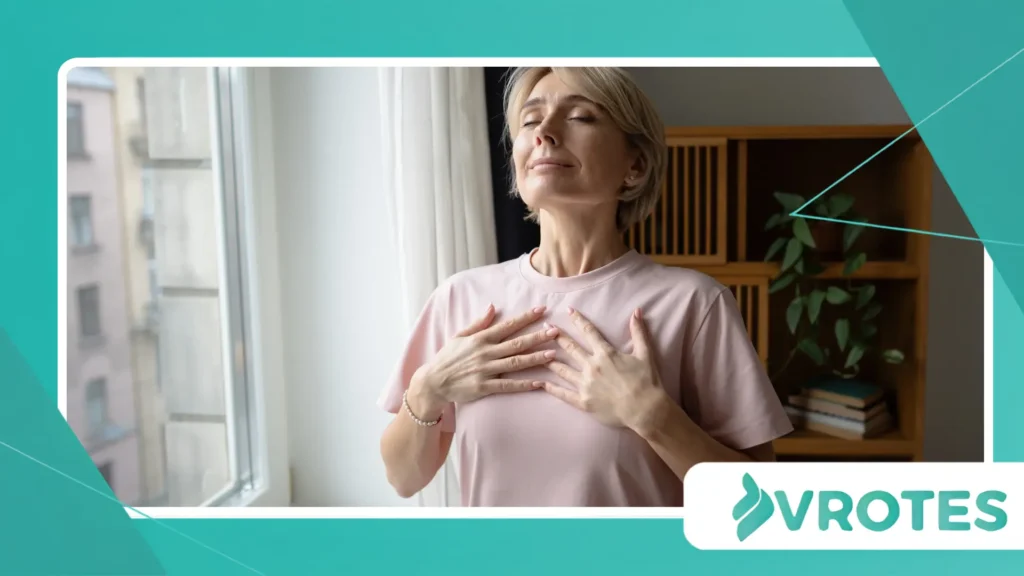
If you search for natural menopause remedies, you will frequently see “paced respiration”—slow, deep abdominal breathing at six to eight breaths per minute—recommended as a first-line technique.
Looking closely at the clinical trials reveals an important distinction between managing stress and eliminating hot flashes altogether.
Early, smaller laboratory studies suggested that practicing paced respiration twice daily could reduce hot flash frequency by roughly 40 to 50 percent.
However, larger, more rigorous randomized controlled trials produced more modest results:
Comparison with control breathing: A 16-week randomized trial of 218 women found that paced respiration was no more effective than shallow breathing or usual care at reducing hot flash frequency, severity, or bother.
Device-guided trials: A 12-week study published in Obstetrics & Gynecology found that women using a portable slow-breathing device reduced their hot flashes by 21 percent, whereas a control group listening to relaxing, non-rhythmic music saw a 35 percent reduction.
Notably, the slow-breathing group did experience greater improvements in insomnia scores.
Clinical guidelines: Based on this broader evidence, The Menopause Society (formerly NAMS) stated in its nonhormone therapy position statement that paced respiration is unlikely to reduce the baseline frequency of vasomotor symptoms on its own.
Meanwhile, the National Center for Complementary and Integrative Health (NCCIH) notes that diaphragmatic breathing exercises show promising evidence for lowering perceived stress, reducing cortisol levels, and improving mood.
What does this mean for you? Breathwork will not fix the underlying hormonal shifts driving menopause, nor is it a substitute for proven medical treatments when symptoms are severe.
However, because stress and panic amplify how intense and disruptive a hot flash feels, slow breathing remains a zero-cost, side-effect-free tool to blunt stress-induced spikes, steady your heart rate, and regain a sense of physical control.
4 Evidence-Informed Breathing Techniques for Stress and Heat Surges
Different situations call for different breathing patterns. Some techniques are built for quiet, daily nervous system training, while others work discreetly at your desk or in the middle of the night.
| Teknik | Breathing Rhythm | Terbaik Digunakan Untuk | Faedah Utama |
| Paced Diaphragmatic Breathing | Inhale 5 seconds, exhale 5 seconds (6 breaths/min) | Daily practice and early onset of a hot flash | Maximizes heart rate variability and stimulates the vagus nerve |
| Extended-Exhale (4-7-8) Breathing | Inhale 4 seconds, hold 7 seconds, exhale 8 seconds | Night sweats, bedtime anxiety, and acute stress spikes | Rapidly downshifts sympathetic arousal and slows heart rate |
| Pernafasan Kotak | Inhale 4 seconds, hold 4 seconds, exhale 4 seconds, hold 4 seconds | Workplace stress, meetings, and racing thoughts | Grounds focus and interrupts acute panic cycles |
| Keluhan Fisiologi | Two quick inhales through the nose, one long exhale through the mouth | Sudden overwhelm or immediate emotional triggers | Quickly offloads carbon dioxide and relieves chest tightness |
1. Paced Diaphragmatic Breathing (6 Breaths Per Minute)
Paced respiration is the most widely studied breathing protocol in menopause research.
++ Simptom Menopaus Selepas Histerektomi: Apa yang Mungkin Berubah
By breathing slowly into your belly rather than shallowly into your upper chest, you stimulate the vagus nerve and signal your brain that you are safe.
- Sit upright with your shoulders relaxed or lie flat on your back.
- Place one hand on your upper chest and the other just below your rib cage.
- Inhale slowly through your nose for a count of five, letting your belly press gently outward against your lower hand while your chest stays relatively still.
- Exhale smoothly through pursed lips or your nose for a count of five, allowing your stomach to fall naturally.
- Continue this ten-second cycle (six breaths per minute) for five to fifteen minutes.
2. Extended-Exhale Breathing
When stress hits, your heart rate speeds up slightly every time you inhale and slows down every time you exhale. Extending your exhalation so it lasts longer than your inhalation taps directly into your body’s natural braking system.
- Inhale quietly through your nose for a count of four.
- Pause gently at the top of the breath for two to four seconds without straining.
- Exhale slowly and completely through your mouth for a count of six to eight.
- Repeat for four to eight rounds whenever you feel a sudden flush of heat or nighttime restlessness.
Baca lebih lanjut: Bagaimana Beban Sensori Hormon Mempengaruhi Fungsi Harian
3. Box Breathing
Used frequently by high-stress professionals to stay composed under pressure, box breathing adds brief, structured pauses that keep your mind from spiraling when an inconvenient hot flash strikes in public.
- Inhale through your nose for four seconds.
- Hold your breath gently for four seconds.
- Exhale steadily for four seconds.
- Hold empty for four seconds before starting the next inhale.
4. The Physiological Sigh
If you do not have ten minutes to step away from your desk, the physiological sigh offers a fast reset. Double-inhaling pops open tiny air sacs in the lungs, while the prolonged exhale triggers an immediate drop in heart rate.
- Take a deep breath in through your nose until your lungs feel nearly full.
- Without exhaling, take a second, sharp sip of air through your nose to top off your lungs.
- Let out a long, slow, unhurried exhale through your mouth.
- Repeat two or three times in a row.

How to Build a Daily Breathwork Habit That Works
Using breathwork only when you are already drenched in sweat is like trying to learn how to swim during a storm. Your nervous system responds much better when slow breathing is already a familiar habit.
Practice during calm moments first: Spend five to ten minutes each morning or before bed practicing paced diaphragmatic breathing.
Training your nervous system while you are calm makes it far easier to access the relaxation response when stress spikes.
Catch the “aura” early: Many women notice a subtle warning sign seconds before a hot flash peaks—a sudden sense of dread, a skipped heartbeat, or a prickling sensation on the skin.
Start your slow breathing the moment you notice that shift rather than waiting for the heat to peak.
Keep the breath effortless: Never force massive gulps of air.
Over-breathing or straining to hold your breath can cause lightheadedness or trigger more anxiety. If a five-second count feels too long, shorten it to four seconds in and four seconds out.
Pair breathing with environmental cooling: Combine your breathwork with practical physical relief.
++ Bagaimana Berjalan Kaki di Bukit Mencabar Kecergasan Pertengahan Umur Tanpa Berlari
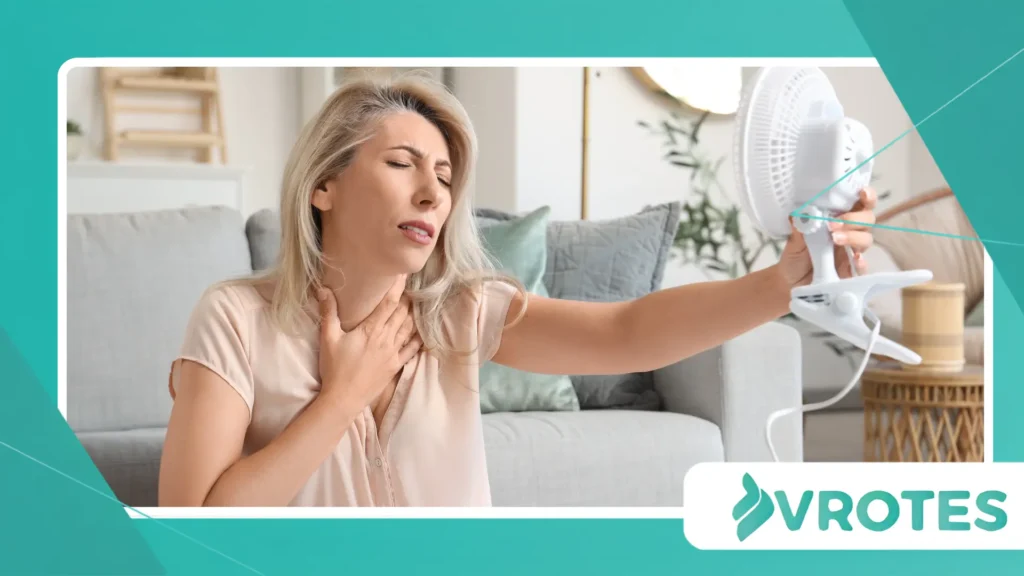
Sip cool water, step near a fan, or loosen a top layer while maintaining your slow exhale so you address both nervous system arousal and skin temperature simultaneously.
When to Talk to a Healthcare Provider
Breathwork and stress management are helpful supportive habits, but you should not feel obligated to white-knuckle your way through severe symptoms.
Schedule a conversation with a primary care doctor or a certified menopause practitioner if your hot flashes:
- Disrupt your sleep multiple nights a week and leave you exhausted during the day.
- Interfere with your focus, work performance, or emotional well-being.
- Occur alongside unexplained weight loss, heart palpitations at rest, fever, or drenching sweats that happen without warmth, which warrant medical evaluation to rule out thyroid disorders or other conditions.
Yang Institut Penuaan Kebangsaan (NIA) highlights several evidence-backed medical and behavioral therapies—including menopausal hormone therapy, nonhormonal prescription medications such as SSRIs, gabapentin, or fezolinetant, and cognitive behavioral therapy (CBT)—that can significantly reduce vasomotor symptoms when lifestyle strategies alone are not enough.
Kesimpulan
Using breathwork to reduce stress-induced hot flashes gives you a reliable, accessible way to steady your nervous system when daily pressures collide with menopausal hormone shifts.
While clinical trials show that slow breathing will not eliminate hot flashes on its own, practicing paced respiration and extended-exhale techniques lowers stress reactivity, eases accompanying anxiety, and helps you feel more grounded during sudden waves of heat.
Start small today: set a timer for five minutes before bed, place one hand on your belly, and practice breathing at a comfortable six-breaths-per-minute rhythm so your body has a built-in anchor the next time stress turns up the heat.
Soalan Lazim
How fast does breathwork stop a hot flash?
Breathwork usually will not stop a hot flash once the heat cascade has already begun, as most hot flashes run their physiological course over one to five minutes.
However, starting slow, deep breathing at the very first sign of stress or warmth can calm your heart rate, reduce secondary panic, and make the episode feel noticeably shorter and less distressing.
How many minutes a day should I practice paced breathing for menopause?
Most clinical studies on paced respiration for menopause have tested sessions lasting 10 to 15 minutes once or twice daily.
If 15 minutes feels overwhelming at first, starting with just five minutes a day—and adding three to five slow breaths whenever you feel tense—is enough to build consistency and lower daily stress.
Why do I feel dizzy when I try deep breathing exercises?
Dizziness during breathwork usually happens when you breathe too deeply or too quickly, which lowers carbon dioxide levels in your blood.
Keep your breaths gentle, quiet, and natural rather than forcing your lungs to maximum capacity, and shorten your count if you ever feel lightheaded or short of breath.
Is breathwork better than Cognitive Behavioral Therapy (CBT) or hypnosis for hot flashes?
No. According to clinical reviews from The Menopause Society, structured Cognitive Behavioral Therapy (CBT) and clinical hypnosis have stronger scientific evidence for reducing hot flash frequency and daily interference than breathwork alone.
Breathwork works best as a daily self-regulation tool alongside proven behavioral or medical treatments rather than a replacement for them.