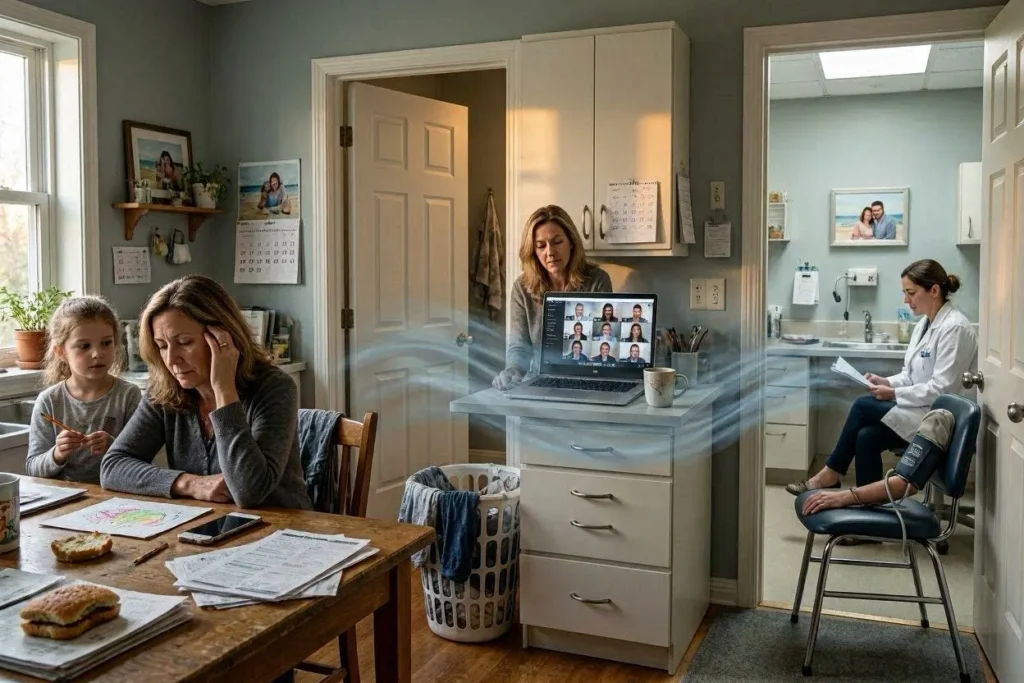
How Emotional Spillover Impacts Relationships and Health
广告
Emotional spillover occurs when stress from one domain of your life unconsciously bleeds into entirely different, unrelated interactions.
This psychological phenomenon silently undermines human connections worldwide.
Understanding how negative feelings transfer between environments provides insight into preserving mental wellness.
Professionals must recognize these emotional shifts before they escalate.
Whether originating from workplace anxiety or financial pressure, displaced frustration targets our closest allies.
Recognizing these patterns empowers individuals to reclaim their emotional boundaries.
Below, we explore the mechanisms driving this transfer and offer strategies for mitigation. Use the table of contents to navigate these evidence-based psychological insights.
目录
- How does emotional spillover manifest?
- Why is emotional regulation critical?
- What are the health consequences?
- How can couples mitigate transfer?
- What role does workplace culture play?
- 常见问题解答

How does emotional spillover manifest?
Daily stressors rarely remain confined to their original source or immediate environment. A demanding day at the office transforms into irritability directed at a supportive spouse.
Psychologists note that emotional spillover happens because cognitive resources become depleted during high-stress events.
Exhausted minds lose the capacity to filter reactions or suppress unwarranted anger effectively.
Transition periods between distinct life roles represent the highest vulnerability for emotional transference.
The evening commute often serves as an insufficient buffer between professional demands and family life.
Without intentional decompression strategies, unresolved tension travels across physical and relational boundaries.
This invisible baggage creates conflicts that seem irrational to those receiving the displaced negativity.
Children remain uniquely sensitive to parental mood shifts and unspoken tension.
Exposure to unmanaged adult stress frequently triggers behavioral issues and heightens childhood anxiety significantly.
Addressing this manifestation requires profound self-awareness and active commitment to behavioral change.
Individuals must learn to identify their specific triggers before transitioning into shared personal spaces.
Why is emotional regulation critical?
Effective emotional management prevents temporary frustrations from permanently damaging foundational relationships.
Regulated individuals maintain the perspective necessary to separate external pressures from interpersonal dynamics successfully.
Failing to compartmentalize distress ensures that loved ones bear an unfair emotional burden.
Over time, this chronic misdirection erodes trust, intimacy, and fundamental mutual respect entirely.
Couples who practice proactive communication navigate these psychological hazards with much greater resilience. Transparent discussions about external stressors prevent partners from internalizing completely unrelated frustrations.
The American Psychological Association highlights that mastering these adaptive coping mechanisms profoundly improves marital satisfaction.
Structured regulation practices shield vulnerable partnerships from destructive external influences.
Ignoring these psychological boundaries invites a continuous cycle of reactive hostility.
Partners quickly become defensive, assuming personal fault for moods dictated by outside circumstances.
++ 预期压力如何扰乱情绪健康
Developing strong emotional intelligence allows individuals to articulate their internal state clearly. Owning one’s anxiety stops emotional spillover dead in its tracks before harm occurs.
What are the health consequences?
Chronic relational tension sparked by displaced stress triggers severe physiological chain reactions. Elevated cortisol levels consistently disrupt sleep patterns, impairing daily cognitive function and recovery.
Prolonged exposure to a partner’s transferred anxiety drastically weakens immune system responses. Clinical research from the 美国国立卫生研究院 confirms marital strain accelerates cardiovascular decline.
Psychological aggression rooted in displaced frustration directly correlates with increased clinical depression rates.
Victims of chronic mood transference frequently report overwhelming feelings of emotional exhaustion.
Physical symptoms often manifest as persistent headaches, gastrointestinal distress, or unexplained muscle tension.
These somatic complaints highlight the undeniable link between relational discord and bodily health.
Mitigating emotional spillover is not merely a relationship enhancement strategy.
阅读更多: 为什么心理健康取决于感觉调节
It represents a vital preventative healthcare measure necessary for sustaining long-term physiological well-being and longevity.
Analyzing current clinical data reveals stark realities regarding stress transference impacts.
The following table illustrates how specific external pressures negatively influence personal health outcomes.
| Stress Origin | Spillover Manifestation | Key Health Consequence 2026 Data |
| Workplace Demands | Shortened patience with family | 42% higher cortisol levels |
| Financial Strain | Increased interparental conflict | 35% higher depression incidence |
| Social Anxiety | Emotional withdrawal from partner | 28% increased risk of insomnia |
| 信息过载 | Reactive hostility toward children | 33% weakened immune response |
How can couples mitigate transfer?
Establishing designated decompression zones provides a physical boundary between distinct life roles.
Taking twenty minutes to unwind silently allows the nervous system to recalibrate properly.
Partners should implement daily check-ins designed specifically to verbalize external frustrations safely.
This structured sharing prevents unspoken stress from morphing into passive-aggressive behavioral patterns at home.
Creating intentional transition rituals helps signal the brain that the workday has concluded.
Changing clothes or practicing brief mindfulness exercises breaks the psychological chain of tension.
Couples must actively cultivate a supportive environment where vulnerability is encouraged.
识别 emotional spillover without delivering immediate judgment fosters deeper empathy and mutual understanding.
Therapeutic interventions offer evidence-based frameworks for navigating these complex emotional landscapes successfully.
Professional counselors teach couples how to process external trauma without attacking one another.
Maintaining individual hobbies outside the relationship builds necessary emotional resilience. Personal fulfillment acts as a powerful buffer against the insidious nature of transferred negativity.
What role does workplace culture play?
Toxic professional environments serve as the primary incubators for severe stress transference.
Unrealistic demands and poor leadership directly fuel the anxiety employees inevitably carry homeward.
Forward-thinking organizations now prioritize psychological safety alongside traditional productivity metrics and output.
Encouraging strict boundaries regarding after-hours communication drastically reduces the likelihood of home-based conflicts.
Leaders who model healthy emotional regulation inspire their teams to adopt similar behaviors.
This top-down approach effectively curtails the pervasive spread of organizational anxiety and burnout.
Corporate wellness programs must address the reality of emotional spillover directly.
Providing accessible mental health resources empowers employees to manage their psychological burdens responsibly.
Ignoring employee well-being ultimately destroys company morale and fractures family units.
Businesses bear a distinct ethical responsibility to foster environments that promote holistic human flourishing.

常见问题解答
What is the psychological definition of this concept?
It refers to the involuntary transfer of mood or stress from one setting to another.
This usually involves bringing workplace frustrations into personal or familial spaces.
When an individual lacks adequate coping mechanisms, their internal distress externalizes onto bystanders.
This psychological displacement harms interpersonal connections by misdirecting negative emotional energy unfairly.
How do I tell my partner they are doing this?
Approach the conversation during a calm, neutral moment rather than amidst an argument.
Use statements that focus on your observations and feelings to avoid defensiveness.
Gently suggest that external pressures seem to be impacting their home interactions heavily. Offer collaborative support while firmly establishing your own necessary emotional boundaries moving forward.
Can positive feelings transfer as well?
Absolutely, joy and enthusiasm can enrich personal relationships when brought home from work.
Positive transference strengthens marital bonds and creates a highly supportive domestic atmosphere.
Cultivating positive experiences actively combats the detrimental effects of daily stressors.
Shared happiness serves as a psychological shield against inevitable modern-day anxieties and pressures.
结论
Tackling the destructive reality of emotional spillover requires continuous effort, deep self-reflection, and unwavering commitment.
Understanding this psychological mechanism enables us to protect our most valuable connections.
We possess the agency to stop external stress from destroying our peaceful sanctuaries. Implementing clear boundaries guarantees healthier, more resilient partnerships long-term.
For further reading on relational health, explore resources from the 美国心理学会. Prioritize wellness today and build the life you deserve.
++ The Spillover Effect: Emotional Labor at Work vs. Relationships
++ What is ‘stress spillover’ and how does it affect your love life?